
The Velocity of Change: Balancing Programmatic Efficiency with Ethical AI in Marketing

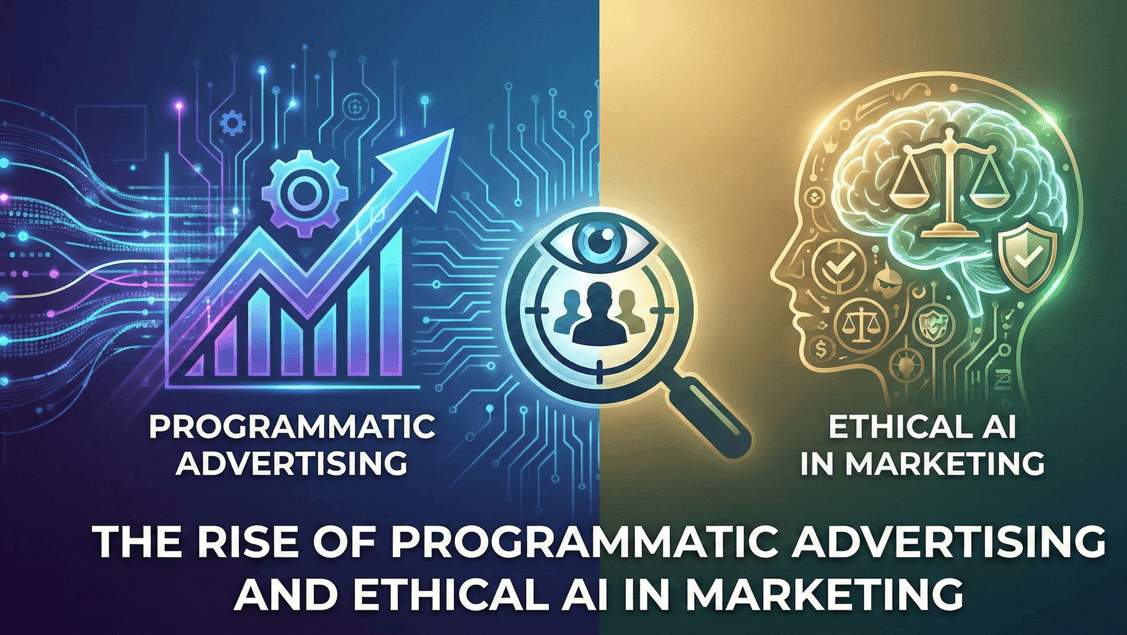
The landscape of digital marketing has undergone a seismic shift over the last decade, moving away from the handshake deals of traditional media buying toward the high-frequency, automated trading floors of programmatic advertising. This transition, driven by the imperativeness of scale and efficiency, is now being supercharged by Artificial Intelligence (AI). However, as these technologies mature, the conversation is pivoting from pure performance to sustainable, ethical application. The rise of programmatic is undeniable, but its long-term viability now hinges on the industry’s commitment to ethical AI.
1. The Programmatic Paradigm Shift
At its core, programmatic advertising is the automated buying and selling of online advertising space. But to define it merely as automation is to undersell its impact. It utilizes data and technology to make decisions in real-time about which ad to show to which consumer in which context.
Gone are the days when marketing teams manually sent proposals to publishers, negotiated rates, and waited weeks for performance reports. Today, Demand Side Platforms (DSPs) communicate with Supply Side Platforms (SSPs) in milliseconds, executing Real-Time Bidding (RTB) auctions while a webpage loads. This has democratized access to inventory and allowed brands to reach audiences across the fragmented digital ecosystem with unprecedented precision. According to recent industry analysis, programmatic ad spend continues to capture the vast majority of all digital display dollars, signifying its role as the default operating system for modern marketing. [Link to eMarketer/Insider Intelligence on Programmatic Ad Spend Trends].
The fundamental change in the human role within this workflow is illustrated below:
Table 1: The Workflow Evolution – Traditional vs. Programmatic Flow
| Feature | Traditional Media Buying (Human-Heavy) | Programmatic Media Buying (Tech-Heavy) |
| Initiation | Humans draft Requests for Proposals (RFPs) and manually vet individual publishers. | Humans set campaign parameters (audience, budget, goals) in a DSP interface. |
| Negotiation | Lengthy phone and email negotiations over pricing and placement availability. | Automated auction occurs in milliseconds via algorithms based on supply and demand. |
| Execution | Manual insertion orders (IOs) and physical tagging of creative assets by ad ops teams. | Instantaneous, automated ad serving upon winning the real-time bid. |
| Optimization | Humans review weekly or monthly reports and manually adjust future buys. | AI algorithms adjust bids, creative, and targeting in real-time based on performance data. |
2. AI: The Engine of Precision
If programmatic provides the infrastructure—the pipes connecting buyers and sellers—AI provides the intelligence flowing through them. Without AI, programmatic is simply fast media buying. With AI, it becomes predictive marketing.
Machine learning algorithms analyze vast datasets to identify patterns that remain invisible to the human eye. AI is leveraged to predict which users are most likely to convert, determine the optimal bid price for a specific impression to maximize ROI, and even assemble dynamic creative assets on the fly based on the viewer’s preferences. This move toward hyper-personalization has been the primary driver of efficiency gains in recent years.
3. The Ethical Frontier
However, the rapid ascent of algorithmic marketing has created significant ethical friction points. The initial “move fast and break things” era of adtech resulted in severe trust deficits among consumers and regulators. The reliance on vast amounts of user data, often collected opaquely, led to landmark legislation like GDPR in Europe and CCPA/CPRA in California.
The challenge now is implementing AI that respects these boundaries. Ethical AI in marketing is not merely about legal compliance; it is about recognizing that algorithms can inadvertently perpetuate biases. If the historical data used to train a buying algorithm contains bias—for example, undervaluing certain demographics—the AI will scale that discrimination exponentially. Furthermore, the “black box” nature of deep learning means marketers often cannot explain why a decision was made, creating accountability issues.
Leading organizations are now establishing ethical frameworks that prioritize transparency and fairness over raw optimization. This involves auditing datasets for bias, ensuring explainability in algorithmic decision-making, and adopting privacy-preserving technologies such as data clean rooms. Resources like the AI Ethics Guidelines from reputable tech organizations are becoming essential reading for CMOs. [Link to IBM or Google’s Responsible AI principles].
The shift isn’t just technological; it is a mindset shift regarding how we treat audience data and algorithmic power.
Table 2: The Strategic Mindset Shift – Growth at All Costs vs. Ethical Stewardship
| Strategic Approach | The “Wild West” Mindset (Past) | The Ethical AI Mindset (Future) |
| Data Philosophy | Harvest maximum volumes of third-party data without explicit user understanding. | Prioritize zero- and first-party data collected with clear, informed consent. |
| Algorithmic Goal | Maximize click-through rates and short-term conversions regardless of user experience. | Optimize for long-term customer lifetime value and brand trust, respecting user privacy. |
| Transparency | “Black Box” operations; trust the machine implicitly without questioning outputs. | Demand “Explainable AI” (XAI); require auditable trails for algorithmic decisions to ensure fairness. |
4. Conclusion: What We Have Learned
The trajectory of modern marketing is clear: programmatic is the mechanism for scale, and AI is the requirement for effectiveness. We have learned that the manual workflows of the past are unsustainable in the current fragmented media environment. The automation provided by programmatic tech is not a luxury intended to replace humans, but a necessity to free human strategists for higher-level creative and analytical work.
Crucially, we have learned that efficiency without ethics is a liability. The initial rush toward data-hungry algorithms has yielded to a mature realization that sustainable marketing requires consumer trust. The future belongs to organizations that can successfully blend the velocity of programmatic buying with a rigorous, transparent, and human-centric approach to ethical AI. The technology is powerful, but the moral compass guiding it must remain distinctively human.