One question I get asked a lot, is where and how to host your Java web application. It’s all fine to create it inside Eclipse with an embedded server, but how do you get it to the people? For a long time, there was no answer for enthusiast programmers. There were only expensive and way oversized options. Things have changed lately, but it’s still not an easy choice.
Therefore I have created a small flowchart that will try to guide you in the maze.
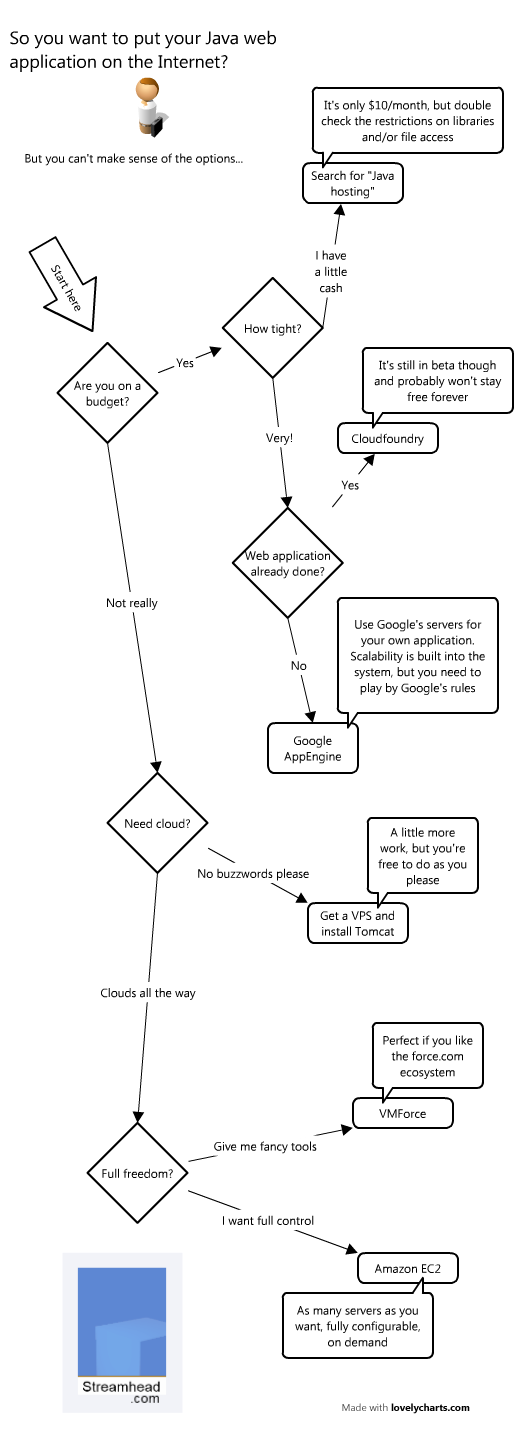
Feel free to submit additions, corrections, comments. I’ll keep updating the flowchart.
If you liked this, why not share it with your friends?
Reference: Java Web Hosting Options Flowchart from our JCG partner Peter Backx at the Streamhead blog.
Therefore I have created a small flowchart that will try to guide you in the maze.
Feel free to submit additions, corrections, comments. I’ll keep updating the flowchart.
If you liked this, why not share it with your friends?
Reference: Java Web Hosting Options Flowchart from our JCG partner Peter Backx at the Streamhead blog.

Try Heroku (http://herou.com). Built on top of Amazon EC2, and has a free tier available that should be enough for 'enthusiasts'.
ReplyDeleteThe correct link to Heroku is: http://www.heroku.com.
ReplyDeleteYou're missing Cloudbees, a full java Platform as a service, with Jenkins as CI and a deployment part.You also have a git repo and a nice lineup of third parties services. For me it's the most complete offer so far. Deployment through maven, cli .. There's also JBoss openshift, and Jelastic. Theu're very advanced compared to Google app engine wich is very limited whit the usage of only Google approved framework.
ReplyDeleteDitto on Cloudbees. They have a free subscription, too, so Cloudbees could fit into the "very tight budget" category and "give me fancy tools".
ReplyDeleteGreat flow chart on Java web hosting options, I definitely agree with your point. Basically it all come down if you have the right budget.
ReplyDeletePerth web design